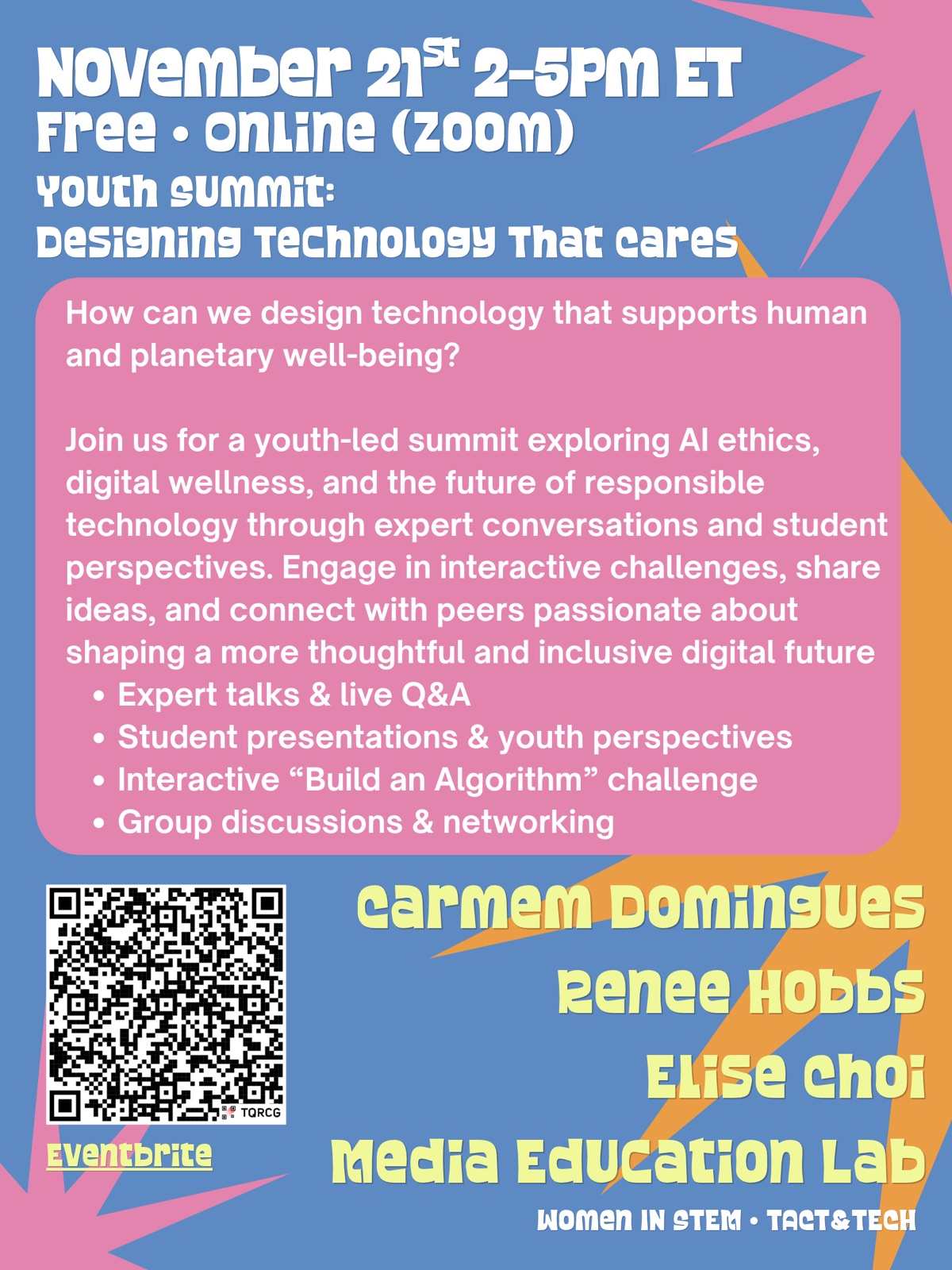
November 21, 2026 · Virtual Youth Summit
tact&tech × Horace Mann Women in STEM
Designing Technology That Cares
How might we design technology to support human and planetary well-being?
A youth-led conversation on AI ethics, media literacy, and the future young people will help design.
- Participants
- ~60
- Featured speakers
- 3
- Audience
- Nationwide
Meet the speakers
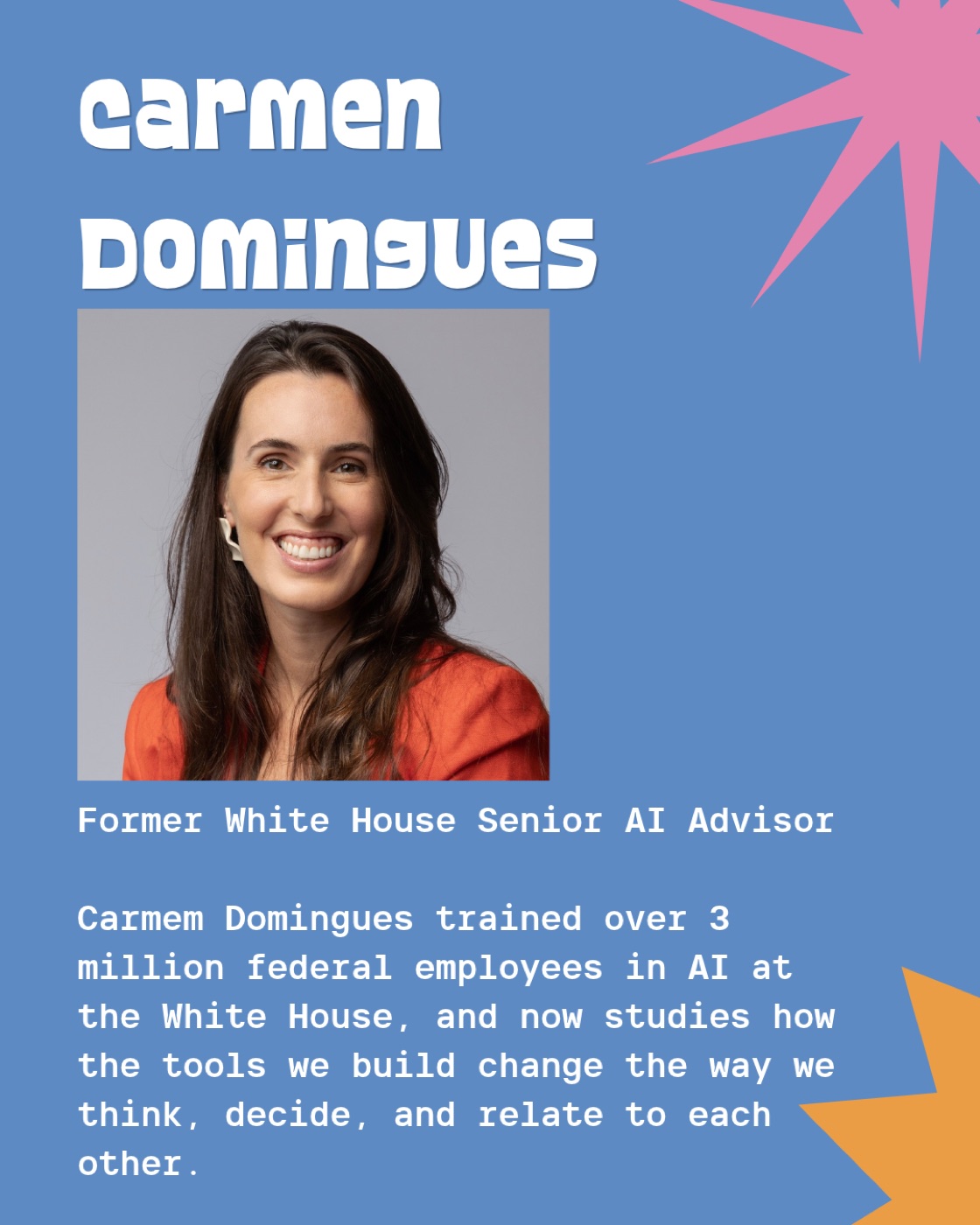
AI & public policy
Former Senior AI Technical Advisor, White House
Distinguished Fellow, Future Government Institute
Nearly two decades in technology, data science, and public policy. She helped develop AI literacy training reaching more than 3 million federal employees and military personnel, and studies how the tools we build change the way we think, decide, and relate to each other.
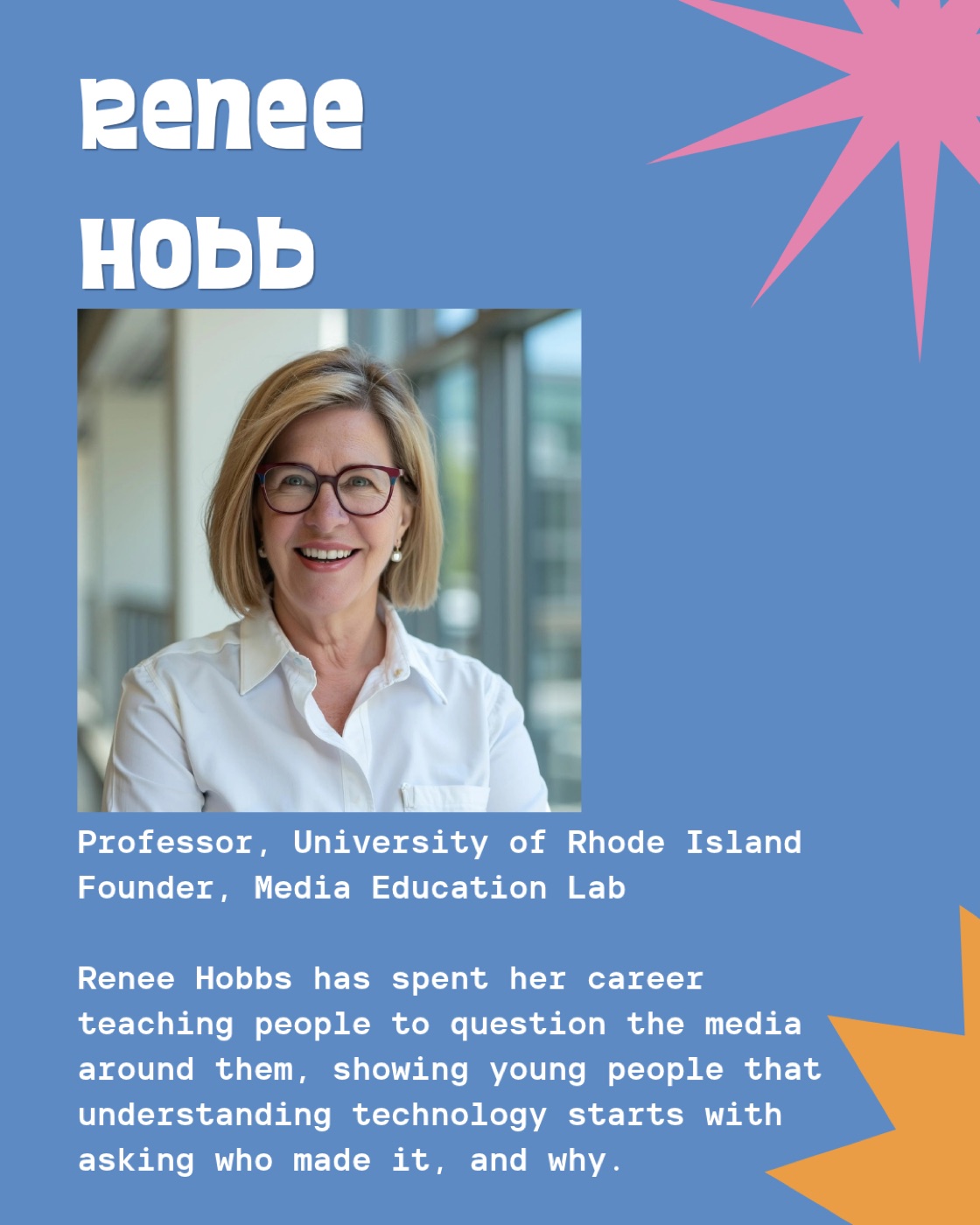
Media literacy
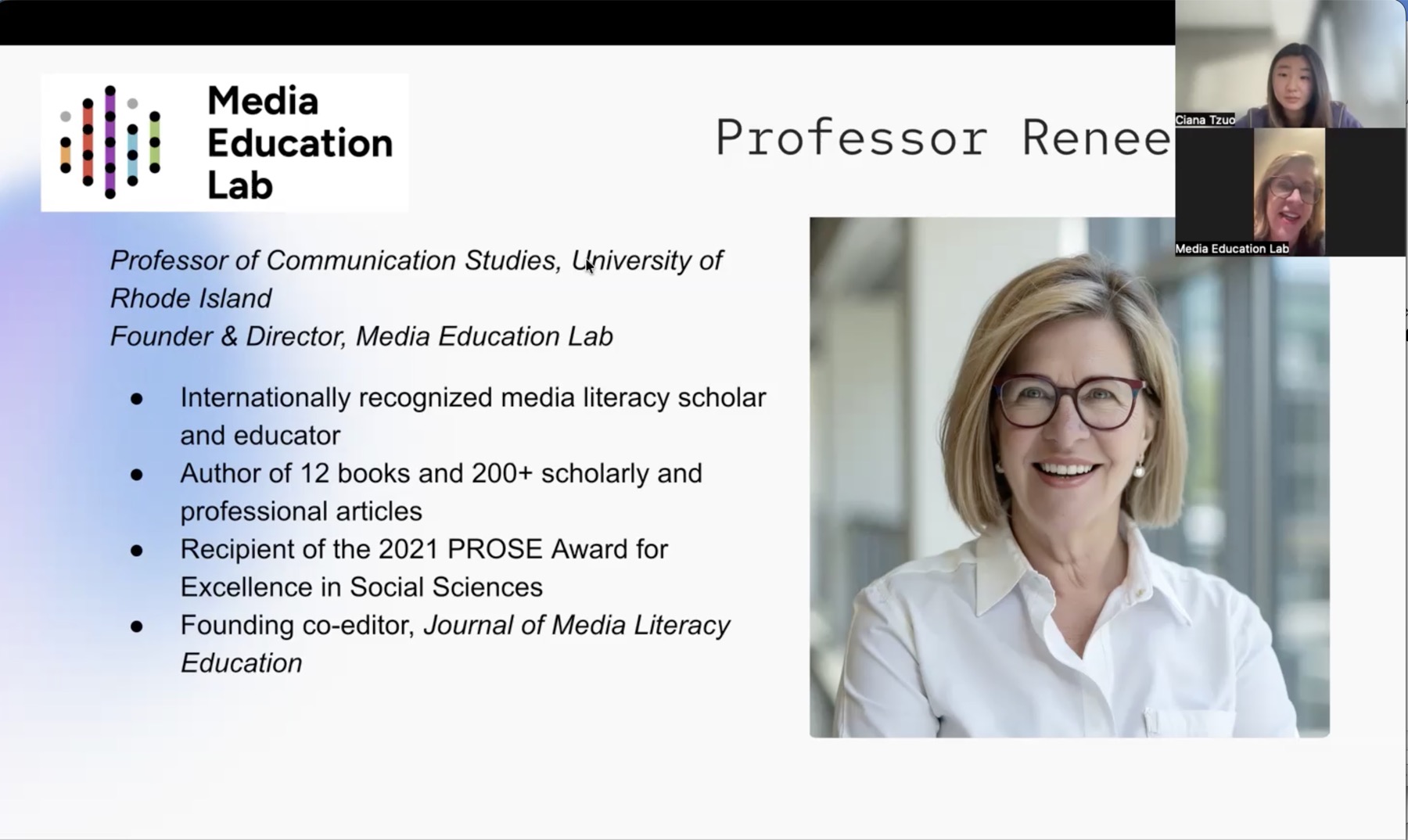
Professor of Communication Studies, University of Rhode Island
Founder & Director, Media Education Lab
An internationally recognized media literacy scholar, author of 12 books, and founding co-editor of the Journal of Media Literacy Education. She teaches people to question the media around them — including who made a technology, and why.
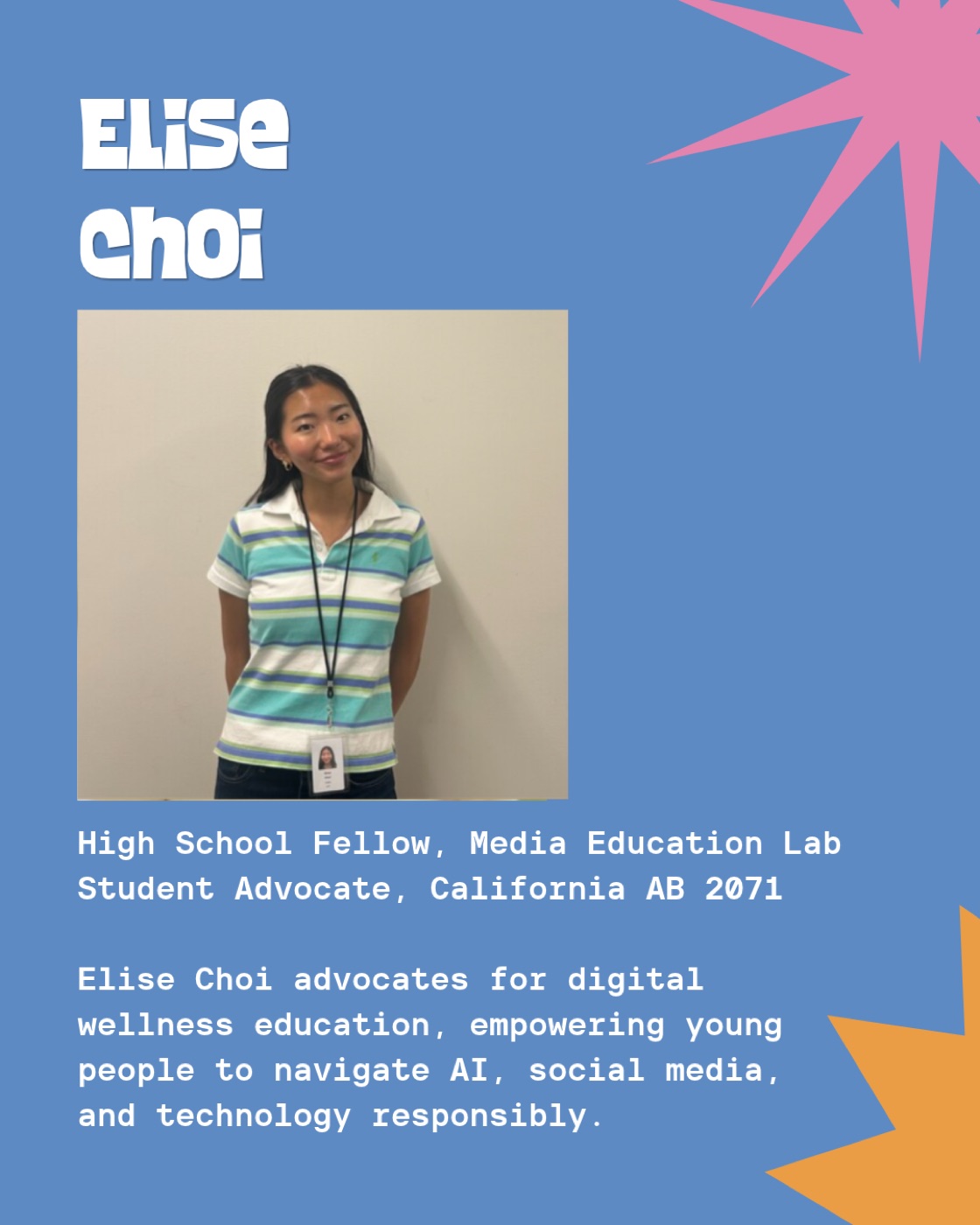
Youth advocacy
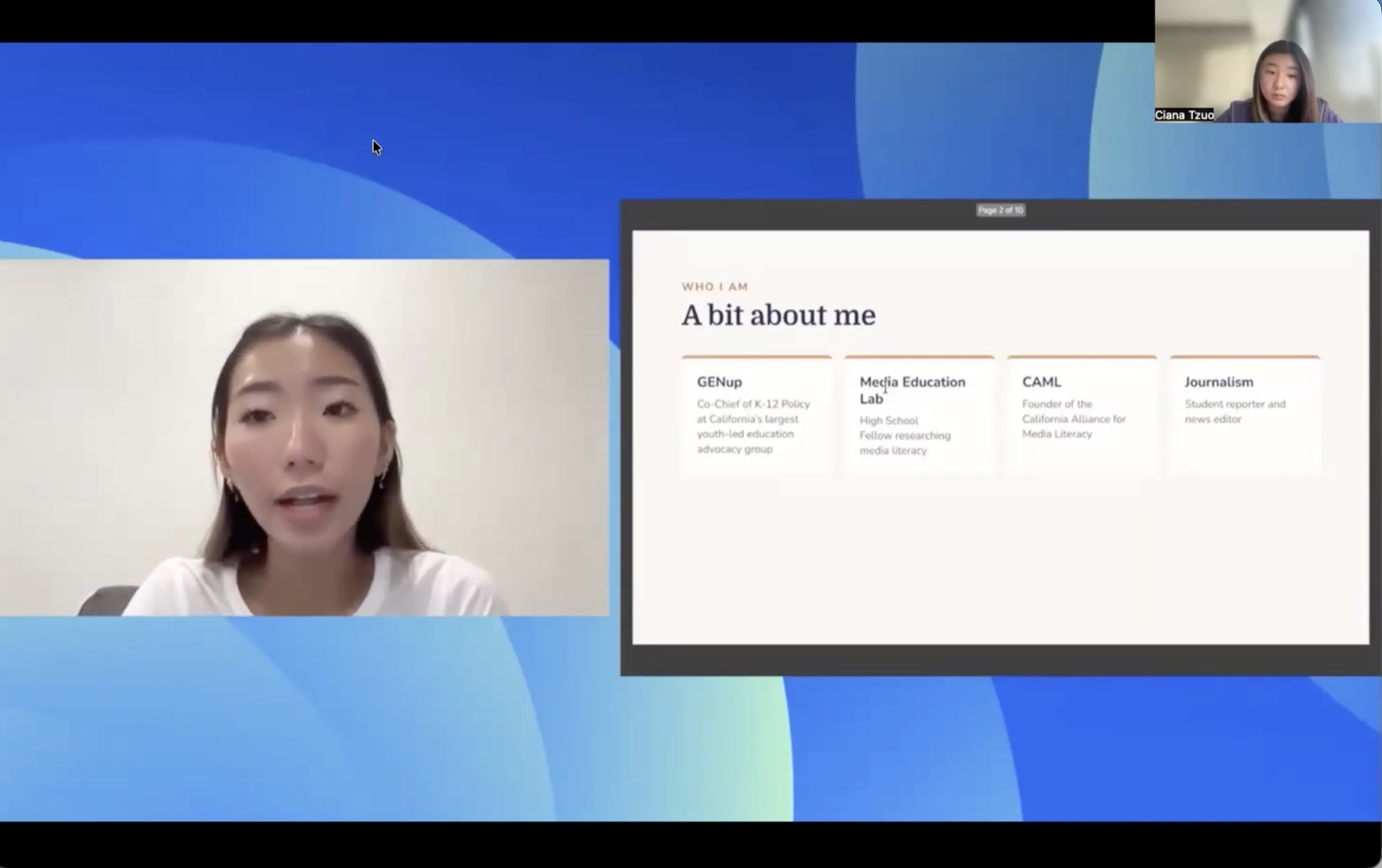
High School Fellow, Media Education Lab
Student advocate, California AB 2071
Co-chief of K-12 policy at GENup, founder of the California Alliance for Media Literacy, and a student journalist. She advocates for digital wellness education that helps young people navigate AI, social media, and technology with more intention.
Event recap
A youth-led conversation on our technological future
On November 21, 2026, Tact & Tech, in collaboration with Horace Mann School’s Women in STEM Club, hosted the Youth Summit: Designing Technology That Cares. ~60 participants from across the United States joined a virtual afternoon on the ethical, social, and human dimensions of technological innovation.
As artificial intelligence increasingly shapes how we learn, communicate, create, and make decisions, the summit invited young people to move beyond asking whether technology is inherently good or bad. Instead, we explored how the values, assumptions, and incentives embedded within technological systems influence our experiences — and how we might actively shape a more responsible technological future.
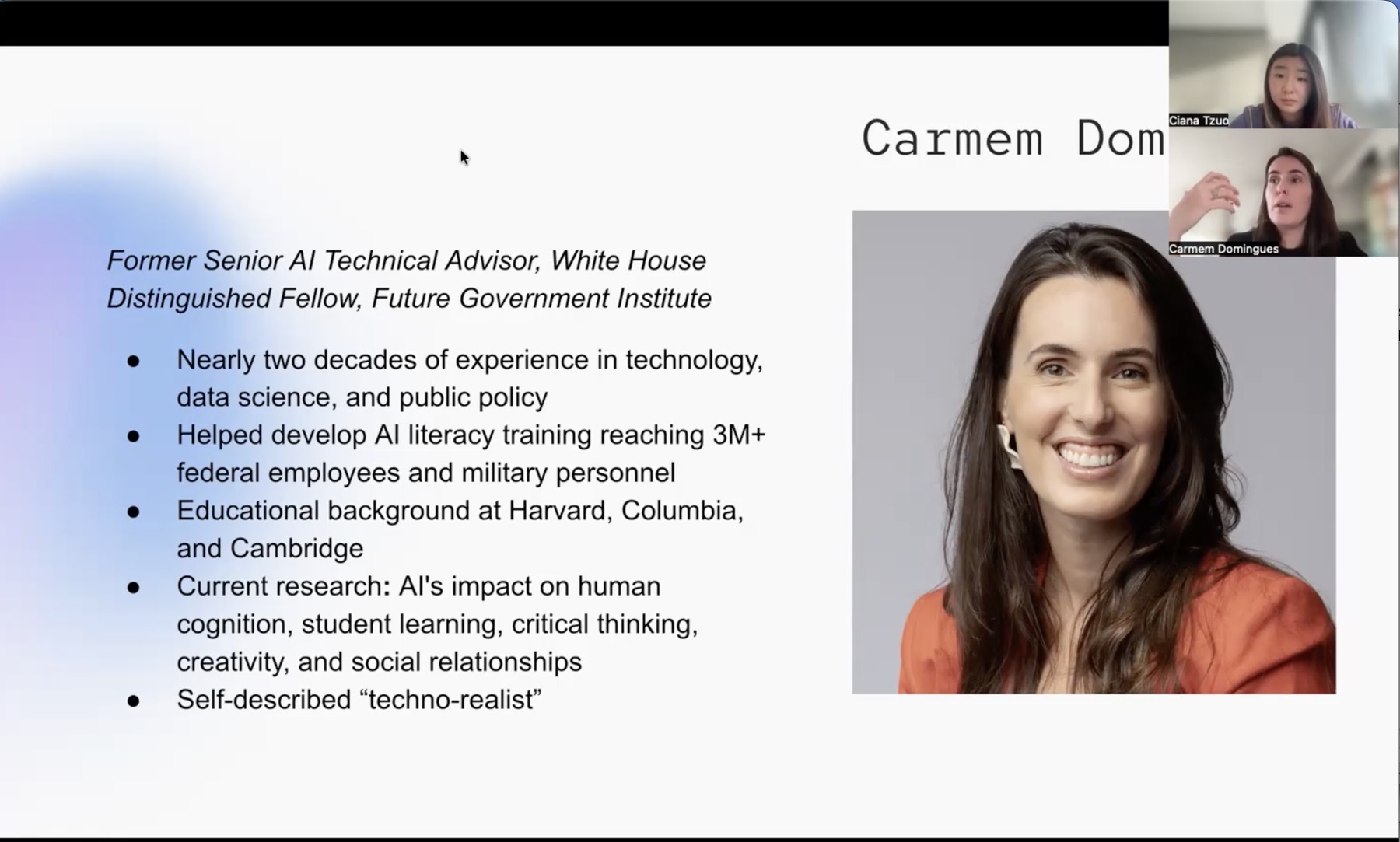
Carmem Domingues, former Senior AI Technical Advisor at the White House, joined for a fireside chat on technology, ethics, and public policy. Drawing on work across data science, entrepreneurship, government, and AI ethics research, she discussed the difficulty of turning technical knowledge into effective policy, the need to preserve human agency in algorithmic decision-making, and what it takes for systems to serve diverse populations. The conversation also treated anthropomorphism as an intentional design feature: human-like interfaces can change trust, engagement, and how readily people disclose information. She encouraged participants to step past both hype and fear and to evaluate AI’s capabilities, limits, and societal implications.
Professor Renee Hobbs, founder of the Media Education Lab and professor at the University of Rhode Island, explored how media literacy can help young people become more intentional users and creators of technology. As educators experiment with generative AI in classrooms, she emphasized students advocating for their own values and taking part in conversations about their education. She introduced defamiliarization — making familiar experiences strange in order to notice assumptions that usually pass unseen — and talked about intellectual humility, AI-assisted creativity, and the value of slowing down with digital media.
The youth spotlight featured Elise Choi, a high school fellow at the Media Education Lab and a digital wellness advocate. In a prerecorded presentation, she described developing and advocating for California’s AB 2071, the Digital Wellness Education Expansion Act: researching gaps in existing legislation, approaching legislators, building a coalition, navigating setbacks, and seeing the proposal signed into law. Her path was a reminder that young people do not have to wait until adulthood to influence technology and education policy.
Throughout the summit, participants reflected on their own relationships with technology — its capacity to strengthen connection, and its capacity to leave people distracted, disconnected, or overwhelmed. The program also introduced an algorithm-design challenge, asking how subjective human values become embedded in systems that look objective. There was not enough time to finish the activity live; it will be published here so people can try it on their own.
Across governance, education, and advocacy, one message held: technology’s future is not predetermined. It is shaped by the decisions we make, the questions we ask, and the voices we choose to include. At Tact & Tech, we believe young people should not simply inherit the technological future. They should help design it.
Conversations
What we talked about
Carmem Domingues
AI governance & ethics
A fireside chat on translating technical knowledge into policy, preserving human agency in algorithmic decisions, and treating anthropomorphism as a design choice that can change trust.
Renee Hobbs
Media literacy & education
On students advocating for their own values as classrooms experiment with generative AI, and on slowing down enough to notice the assumptions inside familiar digital tools.
Elise Choi
Youth-led policymaking
A prerecorded presentation on researching California’s Digital Wellness Education Expansion Act, building a coalition, and seeing a student-written proposal become law.
Short clips from each conversation will be added here as they are edited. The full recording stays off the site until the speakers have confirmed it can be published.
From the summit
Gallery
Continue the conversation
The summit was a start, not a record.
Workshops, future gatherings, and guest conversations start with a note to tactandtech.contact@gmail.com.